

Dental Implants
Give Your Smile Back What's Missing
Support a Brighter Smile with Implants
You stop noticing your teeth when things are right, but when a piece of your smile goes missing, everything feels slightly off-kilter. A meal becomes a challenge. A conversation feels guarded. Even your bite can begin to shift as the teeth around your open space adjust to what’s missing.
Dr. Slaughter helps patients in Midlothian and Duncanville replace their missing teeth with dental implants that support their long-term oral health. Because it sits within your jawbone rather than just resting on your gums, your implant is rooted in place. It doesn’t move when you eat or slide out of place when you talk, giving you back the freedom to live without wondering if your smile will let you down.
Replace the Root, Protect the Bone
Your jawbone stays strong because your tooth roots give it a job to do every time you bite down. Take the root away, and that stimulation disappears with it. Without it, your bone in that area starts to shrink, a process dentists call resorption. Left alone, this can eventually change the shape of your face, not just your smile.
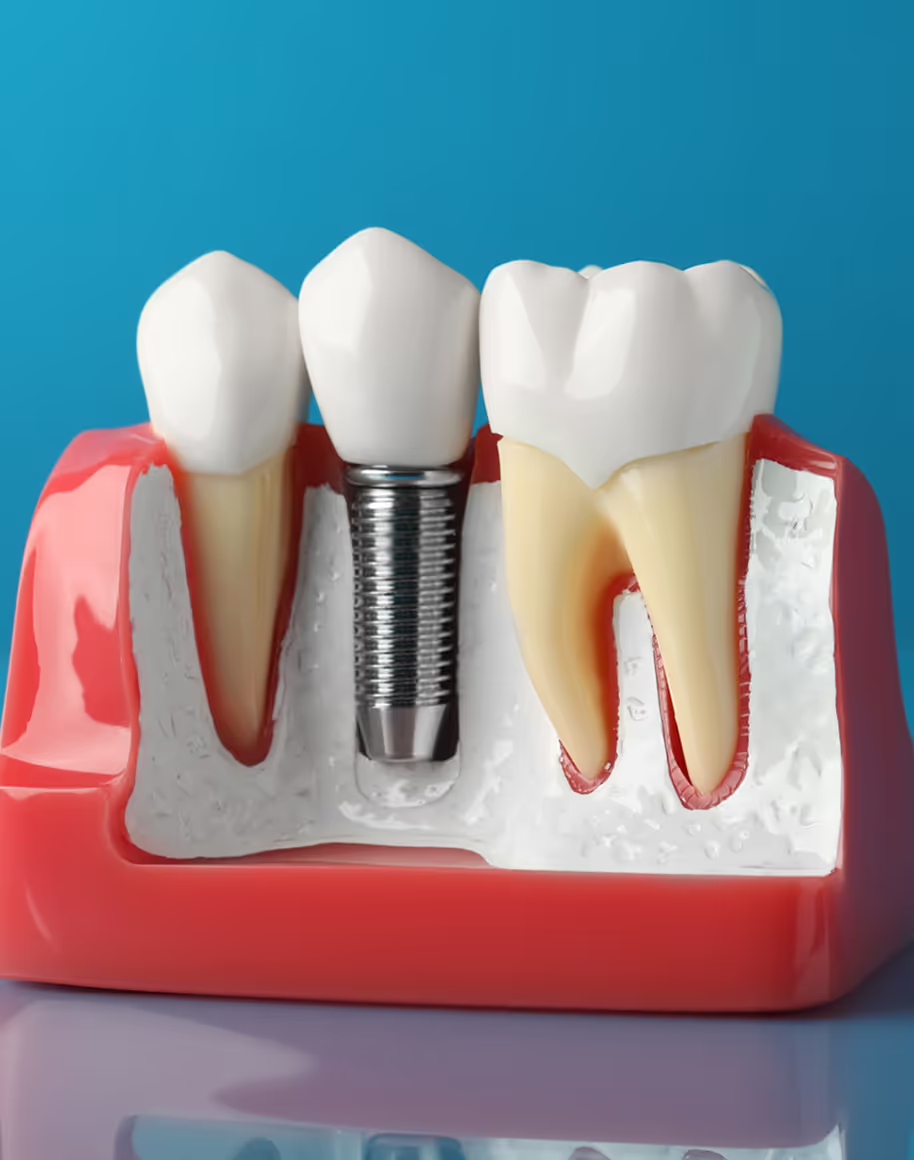
A dental implant is built from three parts working together. A small titanium post takes the place of your natural tooth root, sitting inside your jawbone where the bone gradually bonds to it. Once healed, your implant can anchor a custom crown, bridge, or denture, allowing you to chew and speak with the natural ease you once had.
The Difference Goes Beyond the Gap:
Replacing your missing tooth is only the beginning. The benefits of dental implants can also protect your oral health and make everyday life feel more natural:
- They function and feel like your natural teeth.
- They help preserve your jawbone.
- They don't decay the way your natural teeth can.
- They stay firmly in place, without the slipping or shifting that comes with dentures.
- They don't require grinding down your healthy teeth next to the gap.
- With proper care, they're built to hold up for the long haul.
More Ways to Rebuild Your Smile
Age alone doesn't rule anyone out. Most people who've lost one or more teeth are candidates for implants, whether that's one missing molar or a full row. What actually determines candidacy is what's happening underneath, so before Dr. Slaughter recommends implant placement, he'll take a CT scan and build a 3D model of your jaw to check that the bone and tissue there can support one.
Full-Arch Restoration
Dentures that shift when you laugh or eat aren't a life sentence. Full-arch restoration replaces an entire row of teeth with a fixed set of prosthetics anchored to dental implants, so instead of holding them in with adhesive, your new teeth are held in by your own jawbone.
Teeth in a Day
Waiting months to see your new smile isn't always necessary. In eligible cases, Dr. Slaughter can place your implants and attach a full set of replacement teeth in a single appointment, so you leave with a functional smile the same day you walked in without one.
Bone Grafting
Losing your tooth doesn't just leave a gap. It can leave your bone underneath it thinner than before, whether from the extraction itself, gum disease, or years of going without a replacement. Bone grafting rebuilds that foundation, so your jaw has enough to hold an implant securely.
Facial Trauma Treatment
A broken jaw or a facial fracture doesn't wait for a convenient time. Dr. Slaughter treats oral and facial injuries, including fractures and lacerations, and works to get your bite and your appearance back to where they were before the injury happened.
Your Dental Implant Plan
Dental implant treatment typically moves through four stages: planning, placement, healing, and restoration. The process can take several months, but every stage gives your implant the time and support it needs to become a dependable part of your smile.
Consultation and Imaging
Dr. Slaughter examines your mouth and uses CT scans or 3D digital images to map your jawbone, evaluate its density, and determine the safest angle and depth for each implant. These findings also help him explain what your treatment will involve and how long it may take.
Guided Implant Placement
Your digital plan is used to create a surgical guide that directs the implant into its carefully planned position. After numbing the treatment area, Dr. Slaughter makes a small opening in your gum tissue and places the titanium post into your jawbone. A temporary restoration may be provided so you are not left without a tooth while the implant heals.
Healing Into a Stable Foundation
Over roughly three to six months, your jawbone grows around and bonds with your implant through a process called osseointegration. This connection anchors the post much like your bone once supported your natural tooth root. Dr. Slaughter monitors your healing and waits until the implant is stable before moving ahead, because your bone sets the pace.
Your New Tooth Takes Its Place
After the implant has fully integrated, your custom crown, bridge, or denture is secured to its new foundation. The restoration is shaped to fit your bite and work naturally alongside your remaining teeth. As you adjust, everyday moments like sharing a meal or speaking with others can begin to feel easier again.
Help Your New Implant Last
Surgery is the start of the process, not the end of it. Once you're home, Dr. Slaughter and his team will walk you through exactly what your specific case needs to heal well, since recovery can look a little different depending on how many implants you had placed and whether you needed bone grafting beforehand. Beyond those instructions, keeping your implant healthy long-term comes down to a few daily habits.
A soft-bristled toothbrush and a less abrasive toothpaste go a long way, since the tissue around a healing implant is more sensitive than the gums around your natural teeth. It's also worth keeping up with routine checkups even after you feel fully healed, so Dr. Slaughter can catch anything developing around the implant before it turns into a bigger problem.
Keep Your Implant Care In-House
As a board-certified oral and maxillofacial surgeon, Dr. Quinton Slaughter is trained specifically in the bone and tissue an implant depends on. That means the same person who reads your CT scan and plans your placement is also the one performing your surgery and seeing you through healing. If something comes up along the way, he handles it himself instead of referring you out and starting over with someone new.
That continuity runs through our whole practice, not just the surgery chair. Our Midlothian and Duncanville offices are both built to keep your care in-house, from the digital imaging that plans your implant to the sedation options that make the procedure easier to get through. You're not being shuttled between a general dentist and a specialist, and you're not re-explaining your case at every visit. It's one team, in one place, that already knows your smile by the time your implant is ready to restore.
Stop Planning Around the Gap
Missing teeth can make ordinary moments ask more of you. You don’t have to keep rearranging your life around it. Dr. Slaughter can show you what’s happening beneath your smile and explain what dental implants can realistically do. If implants are right for you, your care stays with one team through placement and healing. Schedule a consultation in Midlothian or Duncanville to find out what it will take to make your bite feel dependable again.
Frequently Asked Questions
Most patients who’ve experienced tooth loss qualify for dental implants to replace the roots of their lost teeth. The implant posts are biocompatible, meaning they can bond with virtually anyone’s healthy dental ridge. However, before you can qualify for the implant placement procedure, Dr. Slaughter will ensure that your smile is free of health complications.
While dental insurance may cover some of your dental implant procedures, the amount of coverage and eligibility for it varies greatly. Speak with your insurance company if you aren’t sure, and be sure to call our office to speak with our team if you have any additional questions.
What makes dental implants so advanced as a tooth replacement option is their ability to replace your lost tooth’s roots. To replace a natural tooth’s roots, implants must be placed so that the bone structure can fuse to the implant posts. This process, known as osseointegration, can take an average of 3-6 months, and your permanent restoration can be affixed to the implant posts and abutments once the healing process is complete.
Not necessarily. We can often provide a temporary crown, bridge, or denture while your implant heals. Your options will depend on the location and number of implants being placed, so Dr. Slaughter will explain what you can expect before surgery.
With good daily care and regular checkups at the Texas Institute of Oral, Facial & Implant Surgery, your implant post can last for decades and potentially a lifetime. The crown, bridge, or denture attached to it may need replacement sooner because it absorbs the daily wear of biting and chewing.